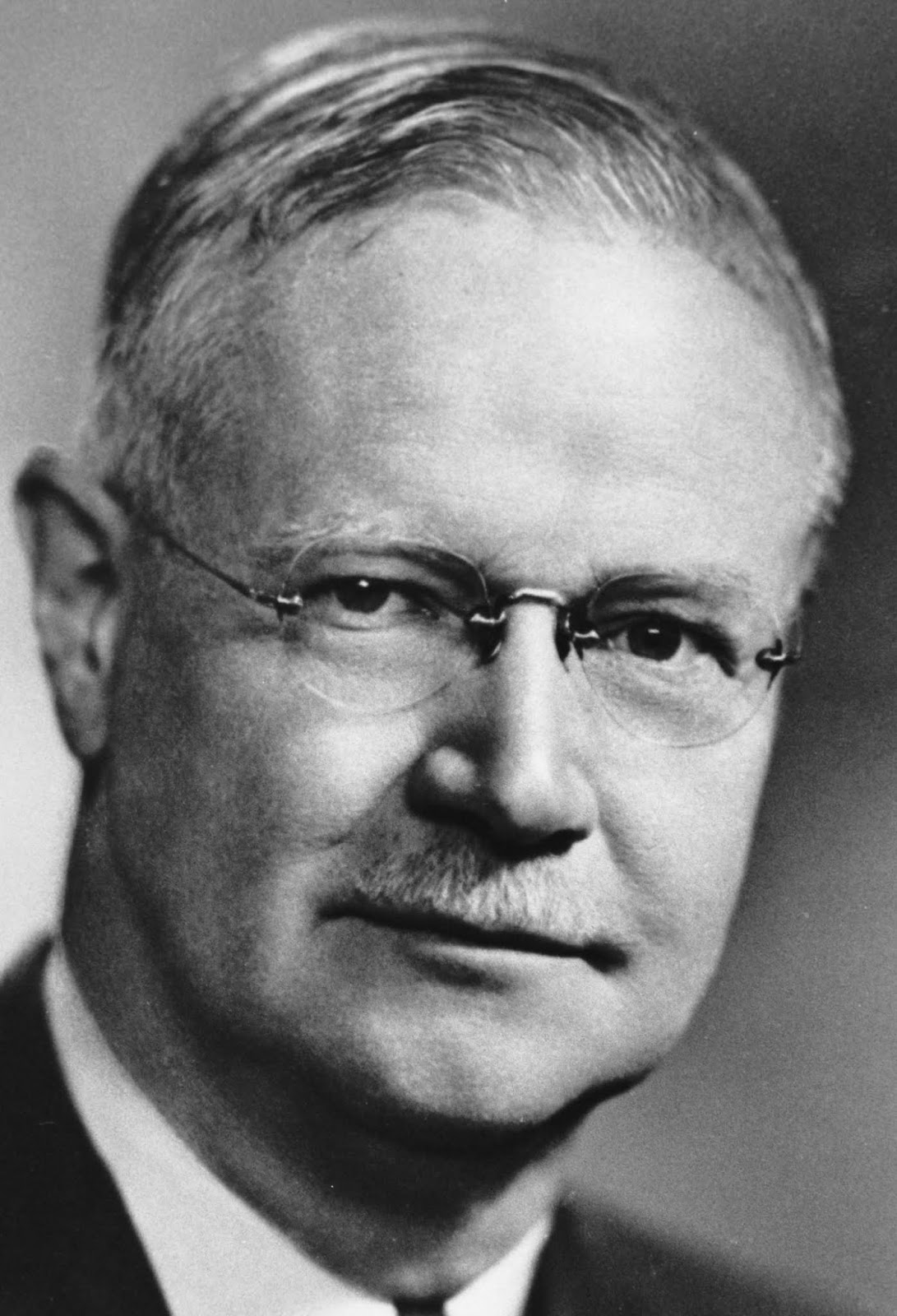
Bill Hulet Editor


Here's the thing. A lot of important Guelph issues are really complex. And to understand them we need more than "sound bites" and knee-jerk ideology. The Guelph Back-Grounder is a place where people can read the background information that explains why things are the way they are, and, the complex issues that people have to negotiate if they want to make Guelph a better city. No anger, just the facts.
Showing posts with label Eugenics. Show all posts

Monday, March 9, 2020

Alvin Kaufman, Dorothea Palmer, Dr. William Hutton, the Parent's Information Bureau, and, "the Great Birth Control Trial"

Alvin Kaufman, from the Eugenics Archive.
Original photo from "Waterloo Hall of Fame".
Used under the "fair dealing" provision of
the copyright Act.
Alvin Kaufman (1888-1979) was a wealthy industrialist from Berlin (now Kitchener) Ontario who came from a family that owned various businesses including a significant one in the rubber business. People will most likely associate him with Kaufman Footwear which was founded by Alvin's father and which he took over in 1920.

He was very much a member of the "establishment" and held various important positions in the community including:
  • chairman of the Kitchener Planning Board
  • member of Kitchener Hospital Board
  • member of University of Waterloo Board of Governors
For the purposes of this article, he was also famous for his support of access to birth control in Canada.

He founded and financed an organization called "The Parent's Information Bureau". This was quite a big project as it published fairly large library of pamphlets that advertised the idea of liberalizing access to birth control to Canadians of all classes. It also created a network of fifty visiting out-reach workers (mostly nurses) who would go to poorer homes across Canada to distribute information about birth control and sold birth control devices to poorer women "at cost".

Strictly speaking, this activity was illegal. The law against educating people about and selling birth control devices was generally ignored at pharmacies, however, because the customers tended to be upper-class men.

Dorothea Palmer.
Alas, I couldn't find an original
source citation.
One of the Bureau's out-reach workers, Dorothea Palmer, went from house to house in a predominately French-speaking, Roman Catholic, Ottawa suburb named Eastview. She was charged under the then current birth control law, which stated:
"Everyone is guilty of an indictable offense and liable to two years imprisonment who knowingly, without lawful excuse of justification, offers to sell, advertises, publishes an advertisement of or has for sale or disposal of any medicine, drug or article intended or represented as a means of preventing conception." (Section 179 of the 1892 Canadian Criminal Code)
However, instead of simply letting Palmer plead guilty, pay the fine, or, go to jail, Kaufman and the Parent's Information Bureau decided to hire some exceptionally groovy lawyers and put the law on trial instead of just the defendant. It's relatively hard to find information about things that happened this long ago without a great deal of time-consuming digging, but luckily there's an article by Bill Stephenson about the event in the Maclean's Magazine archive.

The key point at issue that the defense was arguing was sub-clause two of the law that stated that no one could be convicted of the crime if it could be shown that “the public good was served by the acts alleged”. With this in mind, among a great many other witnesses, Parker's legal team put Kaufman on the stand:
A. R. Kaufman, founder and head of the PIB [eg: the "Parent's Information Bureau"], was the next to testify. He told the court that he had first become interested in birth control as an aid to happier, healthier living when he noticed that in his own factory there was a direct relationship between absenteeism and large families. The less time between children, the more time the wage-earner lost through illness or other causes. In other words, those families which needed the most earned the least.
In a survey in 1929 to see how he could ease distress among such families, he discovered that many mothers had no idea how to space children. He therefore hired competent medical people and set up a clinic in his own factory, giving family-planning data to all who asked for it. So gratifying were the results that women all over Ontario began writing him for information. Thus the work had expanded. Some twenty-five thousand requests for boxes had been processed to date. (Stephenson, Maclean's, Nov 23 1957)
To make a long story short, the Parent's Information Bureau made their case, and charges were dropped against Dorothea Parker. Generally, most people (including myself) would consider this a very good thing for women's rights. But I do think it's important to understand what was motivating Kaufman in the work he was doing.

I think it's clear that Kaufman was a through-going Social Darwinist who was primarily concerned about keeping the genes of the human race "strong" rather than about making life easier for working class and poor. To understand this point, I'd draw reader's attention to a pamphlet that his organization published that was written by the Dr. William L. Hutton---who was at one time both the Medical Health Officer for Brantford and Director of the Brant County Health Unit, and, famous for his pioneering study of the effects of water fluoridation and tooth decay. (Hutton also was an occasional guest lecturer at the Macdonald Institute of the Ontario Agricultural College in Guelph.)  He was also (along with Kaufman) a member of the Eugenics Society of Canada. The pamphlet he wrote was titled A Brief for the Sterilization of the Feeble-Minded, which was subtitled "Prepared at the Request of The Association of Ontario Mayors at their Annual Conference, Orillia, June 1936".

It starts out by assuming a social Darwinist framework, which can be seen from the first two subtitles: "Nature Eliminates the Defectives" and "These Same Laws Apply to Man". It then goes on to argue that modern society has inverted the natural order because more intelligent, upper class individuals use modern birth control techniques to limit their family size while "feeble-minded" lower classes don't.

At this point, Hutton defines "feeble-mindedness" in a way that modern readers should take pains to understand. He says:
Because of their normal physical appearance, they appear to the casual observer to be persons of usual capacity, but they require supervision, for they suffer from arrested development of the mind, and they are incapable of competing on equal terms with their fellows. In cities they tend to drift towards the slums. In times of economic crisis they are among the first to require public assistance. They often live in conditions of extreme squalor. 
I'd like to draw reader's attention to two points that I made in my first article on this subject. If you recall the graphic that I posted there, the definition that people used to identify the "feeble minded" was extremely broad.


It called anyone who was only able to do "complex manual work"---which I would assume includes being a plumber, pipe-fitter, machinist, blacksmith, etc---was a "moron". Only people who could do work "requiring reason and judgment"---which I can only assume would be things like being a doctor, lawyer, or, businessman---would be considered a "real human being".

The key point to pay attention to is in that phrase "they are incapable of competing on equal terms with their fellows". Remember that according to social Darwinism everything is supposed to be settled by competition---it's not a bug, but a feature of the system.

&&&&

Time for the blue print. If you think that what I do is worth reading, why wouldn't it be worth paying for? All I ask is that people subscribe at a dollar a month. It's easy to do through Patreon and Pay Pal.

&&&&

Hutton makes clear that he isn't concerned about what he calls "idiots" and "imbeciles", whom he says
"most frequently owe their defect to birth injuries, accident, or, disease. In other words, idiots and imbeciles frequently come from normal parents who have the prevalent one, two or three-child family. On the other hand, the high-grade defectives (the feeble-minded) frequently come from sub-normal families in which the birth rate is high and in which feeble-mindedness is prevalent and plainly inherited".  (p-4)
He then goes on to describe the feeble-minded as having the intellectual capacity of "ten or twelve years of age" and says of them:
"We would not think of permitting children of ten or twelve years of age, to assume the responsibility of providing for and training other children, and yet we permit the feeble-minded with the intelligence of such children to do this very thing. We misunderstand them to our own undoing, and fail to recognize that it is to their benefit as much as to our own for the intelligent electorate to control their reproduction." (p-4)     
Through a rhetorical "sleight of hand", Hutton then goes on to talk about the cost of housing people in mental hospitals in Ontario. This is intellectually dishonest, because he started off talking about what he labels "idiots" and "imbeciles", which he says actually cannot be prevented through sterilization because they are mostly the result of accidents and disease, and who's parents could not be identified as potential parents of these "defective" children. Secondly, it brings in a totally extra group of individuals---the mentally ill---who again couldn't be identified through their parents, and who often have problems clearly caused by abuse rather than genetics. Finally, the very framework that he uses to identify the "feeble-minded" is not one where they are incapable to caring for themselves, but rather that they cannot compete effectively against the normal population. Remember, earlier on in this document he said that one of their identifying characteristics is "In times of economic crisis they are among the first to require public assistance". This would imply that they are actually able to support themselves in times of full employment. Their problem isn't being able to take care of themselves, it is not being able to beat out other people when there simply isn't enough to go around. That is a totally different thing!

Raising a complete non-sequitor, Hutton starts quoting numbers from mental hospitals and suggests that the only alternative to sterilizing the "feeble-minded" is to put them in a mental hospital (a false dilemma). Then he quotes statistics from England and suggests that if Ontario put every feeble-minded person in a hospital bed, the result would be between a doubling and tripling of the mental hospital facilities in the province. He then says that this would result in an extra cost of $20 million/year to the taxpayer (that would be $380 million in today's money).

(Just for fun, let's do a comparison between Hutton's hypothetical numbers and our current situation. In 1936 Hutton wrote that Ontario had a population of 3.6 million, and now has a population of 14.6 million. He was proposing spending  $5.56/person/year [that's $103/year in today's dollars.] According to the Canadian Mental Health Association in 2017 the Ontario government spent $3.5 billion on mental health issues, that's $240/person/year [that's $13 in 1936 money]. As a means of comparison, the average bricklayer [ie: a job for a "moron"] in Toronto earned $1872/year in 1936.)
I think that what people should pay attention to, however, is the way Hutton is trying to use concern about fiscal policy to drive social policy. I've taken the time to "geek out" on the numbers in order to emphasize that financial arguments are often used to drive social policy that has a profoundly negative effect on individuals. A similar situation happened when the provincial government decided to "deinstitutionalize" mental patients in the 1970s. Originally, in that case the intent was to put most of these patients into group homes where they would be more integrated into the community, which would help them with their treatment. Unfortunately, governments of the day decided to shut down the expensive hospitals and largely pocketed the money saved instead of setting up just as expensive quality group homes to replace them. The result are the hordes of mentally ill individuals haunting our streets and warehoused in grotesquely expensive prison cells. Beware of social policy once it gets in the hands of the bean-counters!  
Indeed, I've been trying to point out the formal reasoning problems (eg: the "nonsequitor" and "false dilemma") and the failure of inductive reasoning (eg: the misuse of economic data) to show that according to the "steps" system of human classification, Dr. Hutton himself could be shown to be incapable of "work using reason and judgement". That would mean that he too could be called a "moron" and encouraged to not have any children. (What's sauce for the goose should be sauce for the gander, no?)

&&&&

There's a scene in the movie No Country for Old Men where two career army sergeants are having lunch in a diner. They've gone to the woman's parents to introduce the man and announce their engagement. The couple is biracial and the man asks the woman if her dad had a problem with his race. She replies "No. He probably would, but he's just so happy that I'm not a lesbian that he doesn't mind you." The man replies "Isn't it great when one prejudice cancels out another---".

I think that that's really how we should understand how the laws against birth control unraveled in Canada. One prejudice canceled out another. It wasn't that people decided that women should have the right to control their own reproduction so much as that the wealthier classes were afraid that the "feeble-minded" were going to swamp the gene pool. Luckily it never came to the situation we saw in NAZI Germany, where the government forced sterilization on some people. Kaufman and Hutton were pragmatists and their own experience showed them that given their druthers poor women would gladly forgo extra pregnancies if they could. As a result, they never went completely "Herrenvolk" and advocated enforced sterilization.

The length on this post is "red-lining", so I'll save other comments for something in the future.

&&&&

Furthermore, I say onto you the climate emergency must be dealt with! 

Thursday, February 27, 2020

Eugenics, Euthenics, and, Institutionalization

In my last post in this series I talked about social Darwinism and the general idea that was current in the latter part of the 19th and early part of the 20th century that humanity shouldn't "molly coddle" the poor and weak because that would just encourage them to pollute the gene pool. This encouraged the worst excesses of capitalism, militarism, and, colonialism. That's talking on the "macro scale". This article is going to show how this way of looking at the world influenced important Canadian policies that continue to be an issue.

&&&&

Possibly the most notorious outgrowth of the Canadian eugenics movement was the Alberta Sexual Sterilization Act of 1928. It's important to understand the context.

First, at the time it was widely believed that a wide variety of human behaviours were considered to originate in heredity. These included:
  • mental illness
  • mental retardation
  • epilepsy
  • alcoholism
  • pauperism
  • certain criminal behaviours
  • social defects, such as prostitution and sexual perversion
In theory, you could be forcibly sterilized any of these all of these different issues. But in actual fact---as in most other government policies---the rules were enforced selectively, which meant that this fell disproportionately on the following minorities:
  • women
  • children
  • the unemployed 
  • domestics
  • unmarried
  • followers of the Roman Catholic and Greek Orthodox flavours of Christianity 
  • those with Ukrainian, Native and Métis ethnicity
The way the Act worked, the government appointed a committee consisting of four individuals: two physicians nominated by the University of Alberta and the College of Physicians, and, two lay people appointed by the Lieutenant Governor General. This committee was then given the power to order the forcible sterilization of individuals that had been recommended to them by medical superintendents of Alberta mental hospitals. And in practice these superintendents made submission to sterilization part of the conditions of release. In other words, for some individuals the only way to be able to leave was to get sterilized.

The Act was amended at various times, but it stayed into effect until 1972. While still part of law of the land, 4800 individual names were submitted to the four person committee with 99% being approved for the procedure.  

&&&&

Dr. Helen McMurchy, CBE.
Public Domain Image c/o
Canada's History.
Similar legislation was proposed in Ontario, but it failed to pass. This didn't stop people from teaching and advocating for eugenics, though. There was a veritable "who's who" of people who advocated for it. One of the most prominent was Helen MacMurchy CBE, who was often a guest lecturer at the MacDonald Institute at the Ontario Agricultural College in Guelph. MacMurchy was a real trail blazer. She graduated with a medical degree in 1901 from the University of Toronto, was the first women intern at Toronto General Hospital, and, the first woman to do post-doctoral studies under Sir William Ostler at John's Hopkins Hospital in Baltimore.

She advocated for the health of both mothers and babies, and did a great deal of good. But she was also a vocal supporter of eugenics and was appointed "inspector of feeble-mindedness" by the province of Ontario in 1915.

Among other things, she published a little book in 1920 titled  The Almosts: A Study of the Feeble-Minded that draws upon examples from English literature to illustrate the various degrees of "feeble-mindedness" and suggests what she considers would be good social policy towards them. In it she shows a great deal of compassion towards these people. She suggests that they be found a place in society where their particular gifts will be properly understood and valued.
Give them justice and a fair chance. Do not throw them into a world where the scales are weighted against them. Do not ask them to gather grapes of thorns or figs of thistles. But give them one chance to bring out the best that is in them. This is but a fair request on behalf of human beings who nevertheless are permanent children and will never grow up---whose joys, and sorrows, and sins, and virtues are all on a childish scale. Responsibility, except so far as a child understands it, is not in their portion. The achievements of life, for them, are bounded by their mental make-up and character---just as our own achievements are, though on a little larger scale. (The Almosts, pp 170-171.) 
Her response to the existence of the "feeble-minded" was two-fold. First, they needed to be recognized as such and made wards of the state. This was because only government institutions would be able to give them a place where their special gifts could be nurtured, where they wouldn't be forced into a cruel competition for life with people who didn't suffer from the same mental deficiencies, and, where they couldn't be exploited by others.
---they cannot be adequately dealt with unless we stop neglecting the mentally defective and reorganize charitable institutions, work for dependents and delinquents, procedures in criminal courts, and above all education and school-work, according to the facts, recognizing mental defectives as children, the wards of the state, who must receive the training, protection and care---in one word, the home that they need, so they do not mingle with the general community [emphasis added by Bill Hulet] (p-177)
The second important point she promotes is that feeble-mindedness is inherited and society needs to stop it's propagation into future generations. She "pussy-foots" around the issue of birth control---which was a pretty scandalous subject at that time---but an intelligent reader should be able to understand the implications of this language. That's because she goes to great length to point out---using a literary example---that the absolute worst thing for society is when a feeble-minded person is allowed to have children.

She introduces this idea while talking about Charles Dickens' novel Little Dorrit (a book that I admit that I've never read). One of the characters is an upper class "dimwit" by the name of "Edmund Sparkler", which Wikipedia describes as
A dimwitted, upper class, young man who falls for Fanny Dorrit as a dancer. They meet again when the Dorrits are wealthy, and he pursues Fanny until she agrees to marry him. Before Mr Merdle (his “governor”) fails, he secures a position for Sparkler in the Circumlocution Office.
McMurchy describes the marriage between Fanny Dorrit and Edmund Sparkler
The dark tragedies involved in this problem are, naturally and properly enough, lightly touched upon in fiction. Miss Fanny, though she said Young Sparkler was "almost an idiot," and despised him for his mental feebleness, married him in the end. He could not earn a living---he had no more mind or will of his own than "a boat when it is towed by a steamship". (p-175)
She also underlines this point by saying later on:
"Our duty to our neighbour must now be held to include our duty to posterity." (p-176)
It's important to remember this concern about the propagation of feeble-mindedness into future generations in her social prescription. It seems obvious to me that she genuinely wants to help individual people. But she is also tremendously concerned about controlling the people she sees as being defective so they don't reproduce.
The mentally defective are those who cannot make, or help to make, a home.
We must make a happy and permanent home for them during their lives. The only Permanent Parent is the State. (p-178) 
I think it's tremendously important to emphasize this point, because I think helps explain part of the motivation to warehouse people in institutions. It isn't just to help people who cannot take care of themselves, but rather to control them because they pose a danger to the long-term health of the human race. Humanitarian concern is being linked to social Darwinism.  And, as I hope to show in a future post, that created a great deal of misery for individuals.

&&&&

And now, let's talk about "euthenics"---


Dr. Frederkick Tisdall.
Public domain image
c/o the Wiki Commons.
Another famous fellow who used to lecture at the Macdonald Institute has also been implicated in another current of thought that dramatically affected our institutions: euthenics. Whereas eugenics was concerned about improving humanity through weeding out "bad genes", euthenics is about improving the human race through creating an efficient way of living that maximizes an individuals human potential. In other words, eugenics is about nature, and, euthenics is about nurture. The person I'm referring to is a fellow named Frederick Tisdall who is probably most famous for being one of the inventors of pablum.

The story that I'm going to focus on started in WW2 when he held the rank of Wing Commander in the RCAF and he took part in a multi-agency assessment of nutrition in several First Nations communities. They were supposed to take blood samples and other tests to look at vitamin deficiencies, but were struck almost immediately by the amount of chronic malnutrition they were seeing in native communities.
At both Norway House and Cross Lake, they reported that, “while most of the people were going about trying to make a living, they were really sick enough to be in bed under treatment and that if they were white people, they would be in bed and demanding care and medical attention.” Following a visit to the homes of some of the elderly residents of Norway House at the request of the Chief and Council, moreover, researchers found that “conditions were deplorable where the old people were almost starved and were plainly not getting enough food to enable them to much more than keep alive.”
(This quotation comes form Administering Colonial Science: Nutrition Research and Human Biomedical Experimentation in Aboriginal Communities and Residential Schools, 1942-1952 
by Ian Mosby Phd., which I obtained from his personal website.  P-146, reprinted from 
Histoire sociale / Social History.)

What these researchers were seeing was the result of both capitalism and government policy.
The communities in the central subarctic region that were the subjects of these major nutrition studies during the 1940s had been hit disproportionately hard by the economic collapse of the Great Depression. To a certain extent this was because incomes within the fur trade had plummeted, dropping by 66 per cent in the Prairies between 1924 and 1935 and by 38 per cent in Northern Ontario between 1925 and 1935. To make matters worse, many areas had seen steadily declining populations of fur-bearing and food animals during the interwar years, in no small part due to over-hunting by unscrupulous non-Aboriginal trappers throughout the preceding decades.
Hunger in these communities was not simply a product of declining incomes and disappearing fur-bearing animals, however. The 1930s also saw Indian Affairs actually cut back on its provision of unemployment relief. Between 1922 and 1934, the government’s total relief payments fell by 32 per cent, from $242,000 to $164,000. As Hugh Shewell has shown, much of this was done through orders prohibiting relief payments to able-bodied men, reducing sick relief rations, and other forms of so-called “austerity” and “restraint” within Indian Affairs. (Mosby, p-149)
One would think that the normal person's response to seeing a situation like this would be to make a fuss in advocacy of increasing the amount of money being spent on rations for the First Nation's communities. But instead, they decided that this would be an excellent opportunity to study the effects of food supplements on the health of people who are suffering low-grade, chronic starvation!
As Moore [Indian Affairs Branch Superintendent of Medical Services Dr. Percy Moore]  would tell a House of Commons Special Committee in May 1944, “As a result of the survey one of the first steps considered necessary in any program to improve the health of the Indian through better nutrition was to demonstrate whether provision of some of the food substances or food factors found to be lacking in their diet would result in an improvement in their health.” Moore and the rest of the research team therefore almost immediately set about organizing a scientific experiment on the effectiveness of vitamin supplements conducted primarily by the resident physician for the Indian Affairs Branch at Rossville, Dr. Cameron Corrigan. (Mosby, p-151)
There were several nutritional studies, but it needs to be remembered that what the researchers were after wasn't just information about how specific vitamins and essential elements help people suffering from chronic malnutrition. As a result, some of the studies also included anthropologists who did work on the psychology of First Nations people.
That's because they also wanted to find out how they could engineer the behaviour of aboriginal people so they would be more easily molded into mainstream Canadians. That's how euthenics manifested itself in Canadian society. It's important to realize that there is a "nub" of value in the idea that it might be a good idea to select out and remove specific hereditary diseases from the gene pool, but that is nowhere near the same thing as supporting social Darwinism---which is based on very sketchy ideology. In the same way, there is something to the idea that how we treat people has an impact on the way they develop---but that's not the same thing as using social policy to engineer an entire people's culture out of existence. 
Mosby quotes Tisdall speaking to a Parliamentary committee in 1947:
We do not know as much as we should as to what motivates the Indian. We have to find out what incentive we can place in front of him. The Indian is very different from us. We have to find out how the Indian can be encouraged, how his work can be diversified, his efforts diversified, so he can make himself self-supporting, so he can obtain the food he needs. (Mosby, p-154)
As I've mentioned before, I'm trying to not make these articles super long anymore. So I'm going to stop right here. I'll see what I can come up with more information about the dark side of Canadian, Ontario, and, Ontario Agriculture College culture for a future story---.

&&&&

At the present time there is a lot of friction being created in society over the place of the First Nations in Canadian society. Knowing about things like the nutrition experiments that were done at isolated aboriginal communities helps people understand the anger that is manifested against "settler" society. (It's certainly helped me---.) That's why I put out the Back-Grounder, and that's why people read it. If you can afford it, why not support me? As little as $1/month would show me that you care about the news. And, it's easy to do using Patreon or Pay Pal. 

&&&&

Furthermore, I say onto you. We have to deal with the Climate Emergency! 

Thursday, February 13, 2020

Eugenics in Guelph and Ontario: the Bigger Context

A couple months back I did a walk through of an exhibit at the Guelph Civic Museum that dealt with a part of our past that I doubt most people know about. That is the role that eugenics and social "Darwinism" played in public policy for a very long time in Canadian history.

For those of you who don't know, "eugenics" is the pseudo-science of breeding a better type of human being through "culling the herd" of "inferior" types of human beings. It was promoted by a Victorian polymath by the name of Francis Galton. (Among other things, Galton pioneered the study of fingerprints.)

Sir Francis Galton, chalk drawing by Janet Caroline Fisher.
From the UK National Portrait Gallery, c/o Wiki Commons.

It's not a difficult concept to understand. We breed better sheep, dogs, cattle, etc, by only selecting the very best individuals for breeding stock. Why can't we do the same thing with people?

The problem is, however, that it isn't all that easy to decide what "best" means for livestock, let alone people. For example, if you breed pigs to be lean (something I know a little about), you may find out that in the process you end up with animals that have smaller litters, or are more susceptible to disease, or have behavioural problems, and so on. All breeding is something of a "trial and error" process with lots of "dead ends" and "false starts"---even when you are looking to increase a very specific, easily-measured trait. This problem is dramatically magnified in human beings because a lot of people's most important qualities are very difficult to quantify---for example "morality", "work ethic", "creativity", "empathy", etc. 

In addition, there is the secondary problem of human development being very dependent on conditioning and early life experience. Human beings who grow up in poverty often have extremely limited opportunities for education and personal development compared to people from wealthier backgrounds. But it's very hard for an outside observer to understand where the deficiencies that come from a person's environment end and the genetic components begin.

This isn't a problem in livestock breeding, simply because breeders don't separate their animals into "poor" and "wealthy" groups so they can mistreat the former and coddle the latter. But I do remember that my family once caught a feral pig we found rooting through our vegetable garden and put it into our barn with the animals destined for market. That pig was much smarter than the animals we'd raised from birth! We found that it could open the doors in the pens, climb stairs, etc. This taught me that even with animals like pigs the environment that they grow up in has a huge impact on the development of the individual.

In effect, all the livestock on our farm were "developmentally challenged" because of the limited stimulation their environment offered when they were young. Consider what similar limitations in a young human's early environment might have on his or her development.  

These criticisms have generally discredited eugenics amongst respected, academic researchers. But this hasn't stopped politicians and "reformers" from trying to apply eugenics to social policy. It is just too tempting to use biology to explain class and race differences because it removes any need to talk about the economic and political systems and how they unevenly divide society's collective wealth.

Consider the following graphic:

This is a widely reproduced stock drawing from an article titled Exhibit of Work and Educational Campaign
for Juvenile Mental Defectives, 
which was published in a 1913 edition of The Survey, which was the official
journal of Charity Organization Society of the City of New York from 1909 to 1937. Public Domain Image.

It could be argued that it represents the limits that intellectual disability place upon specific individuals and their ability to function in society. ("Idiot", "imbecile", and, "moron" started off as scientific terms and were originally meant to not be demeaning. This is why this old graphic uses them.) But this sort of classification system can quickly morph into something else. And at least some people will inevitably start to believe that anyone who does "simple menial work" is by definition a "imbecile" and couldn't possibly work at a better job if one was offered to them.

Various members of the ruling elite could easily draw the conclusion that because someone is at a specific place in the economic pecking order that they are there because of their mental deficiency. By following this line of reasoning I would be seen as being either a "medium imbecile" (because of the years I spent in farm labour and as a janitor) and only reached the level of "high grade imbecile" later in life as a "general dog's body" at the University Library. Because I never learned a trade, presumably I never even reached the level of being a "moron".

Here's another graphic, which reflects this way of understanding society according to eugenics.

Original graphic by D666D. C/o Wiki Commons.

This idea that all of economics and society is a field for competition between people with greater or lesser inherited ability is called social Darwinism. The term became widely understood in the late 19th century and the theory was used to justify the excesses of both Capitalism and Nationalism.

Thomas Henry Huxley, a well-respected naturalist (for example, he was the first anatomist who identified the link between birds and dinosaurs) who was such an effective defender of natural selection that he was nick-named "Darwin's Bulldog", declared in his review of On the Origin of the Species that "---every philosophical thinker hails it as a veritable Whitworth gun in the armoury of liberalism---". (In this context, read "liberalism" as "libertarianism"---again, terms change their meaning over time.) In other words, every evil visited upon the poor and weak could be justified as being simply part of Darwinian selection, and it would be against the laws of nature and damage the human race if any attempt were made to help these unfortunate individuals.

In much the same way, schools of nationalism tended to see competition between nations as being another field for competition that sift out the weak, leaving only the strong. This point of view existed everywhere, but probably became most entrenched in Imperial Germany. Here's a YouTube video that paints the historical context extremely well.


War isn't a disaster that results from economic forces, dynastic politics, etc. Instead, it is a necessary force that cleans out the "human garbage" that accumulates and clogs the gene pool during long periods of peace.

&&&&

I understand that January is a difficult time for most people. Retail owners accept that they don't sell much in this month. Charities don't get a lot of donations either. But it's February now, and I'd like readers to consider subscribing to the blog. I don't expect a lot, $1/month really does work for my business model---but $0/month doesn't work at all. It's easy to do through Patreon and Pay Pal. 

&&&&

Almost immediately after social Darwinism emerged as a social force there were critiques of it being raised. The most articulate advocate of this opposition was---of all things---a Russian prince who was at the same time a significant thinker in both evolutionary biology and anarchism: Prince Peter Kropotkin.

Peter Kropotkin, photo by Nadar, and preserved in the New York Public Library.
C/o the Wiki Media Commons.

He published a book titled Mutual Aid: A Factor of Evolution in 1902. It argued that people need to remember that "survival of the fittest" is something of a tautology. That's because the only definition of "fittest" that is implied is just the ability to survive. This doesn't mean "strongest", "most aggressive", "most selfish", etc---it just means "survival of those that survive". And as Kropotkin pointed out, there are lots of examples from nature where animals survive and thrive as communities because individuals mutually support each other (think about social insects, for example.) Indeed, a whole range of evolutionary biology called "selfish gene theory" grew out of Kropotkin's insights once biologists learned about DNA and role it plays in evolution.
It's not a happenstance that capitalists and militarists looked at On the Origin of the Species and found a justification for abusing workers and fighting murderous wars, and, an anarchist saw mutual aid. People start off with basic assumptions about the world around them and use these assumptions to pick and choose evidence that supports those assumptions. It is possible to learn and grow beyond these prejudices, but it isn't an easy process. It requires a great deal of self-reflection and that can often be in very short supply---. 

&&&&

Sam Harris, photo c/o
Wiki Media Commons.
Cropped by Bill Hulet

A few years back there was a lot of passionate debate on-line about an interview that Sam Harris did with Charles Murray. Murray is somewhat infamous for writing a book titled The Bell Curve that argues that Black individuals are 15 points---on average---less intelligent than whites. This extremely explosive statement is couched in a lot of scientific language that went over my---and I assume almost every other listener's---head so I found myself having to simply "suspend disbelief" while I listened to it. At least Murray went to great lengths to lessen the impact of what he was saying by pointing out that the difference in IQ between individual black people is much higher than the average difference between whites and blacks. This means that it is impossible to infer that any specific black person is less intelligent than another specific white person---simply because of their skin colour. But as Harris points out, this statement does provide a great deal of "aid and comfort" to white nationalists. 

What I found important about the discussion was that about half way through the conversation
Charles Murray. Photo by Gage  Skidmore,
c/o the Wiki Media Commons.
Murray "switched gears" and started making pronouncements about social policy that didn't seem to have any sort of relation to the first part. Even worse, while he kept saying that the relationship between IQ and genes that he'd said in the first part of the talk was non-controversial in the scientific community (something that I have seen disputed by experts in the field), he admitted that his public policy ideas were very controversial with academic researchers.

The main points he made was that our modern economy places a much greater emphasis on IQ than any other time in human history and that the population is separating out into two different categories---one in which is a superior "over class" and the other is an inferior "under class". The important point for him is that all the usual explanations for inequality in society cannot be explained through racism, poor public schools, class bias, etc. Instead, it all comes down to IQ, and there's absolutely nothing at all that can be done about that. You are what the genes you inherited say you will be, and that's that.

Given that operating assumption that it all comes down to the genes you inherit and no social policy can overcome your physical inheritance, Murray suggests that the only logical thing that the government should do is get rid of every program that seeks to "level the playing field". Instead, he supports a universal basic income. This would be given to every single member of the population, who would be forced to have a bank account. This would make people accountable for managing the money, which would force these poor, benighted souls to at least develop the traditional middle-class virtues of "thrift" and "budgeting".

I mention the conversation between Harris and Murray not because I wanted to explain every nuance of this heated debate, but rather to point out that social Darwinism is still an active part of public discourse. Again, not within the scientific community (neither Harris nor Murray are experts in the field---although they both like to "talk like one"), but as part of political ideology.

As I hope to point out in the future articles on this subject, this worldview was also quite prevalent in Ontario public policy until quite recently. And it had a profound impact on the lives of unfortunate individuals who found themselves caught up in it.   

&&&&

Moreover, I say onto you. We have to deal with the Climate Emergency!